The idea in plain English
Plain idea
What changes
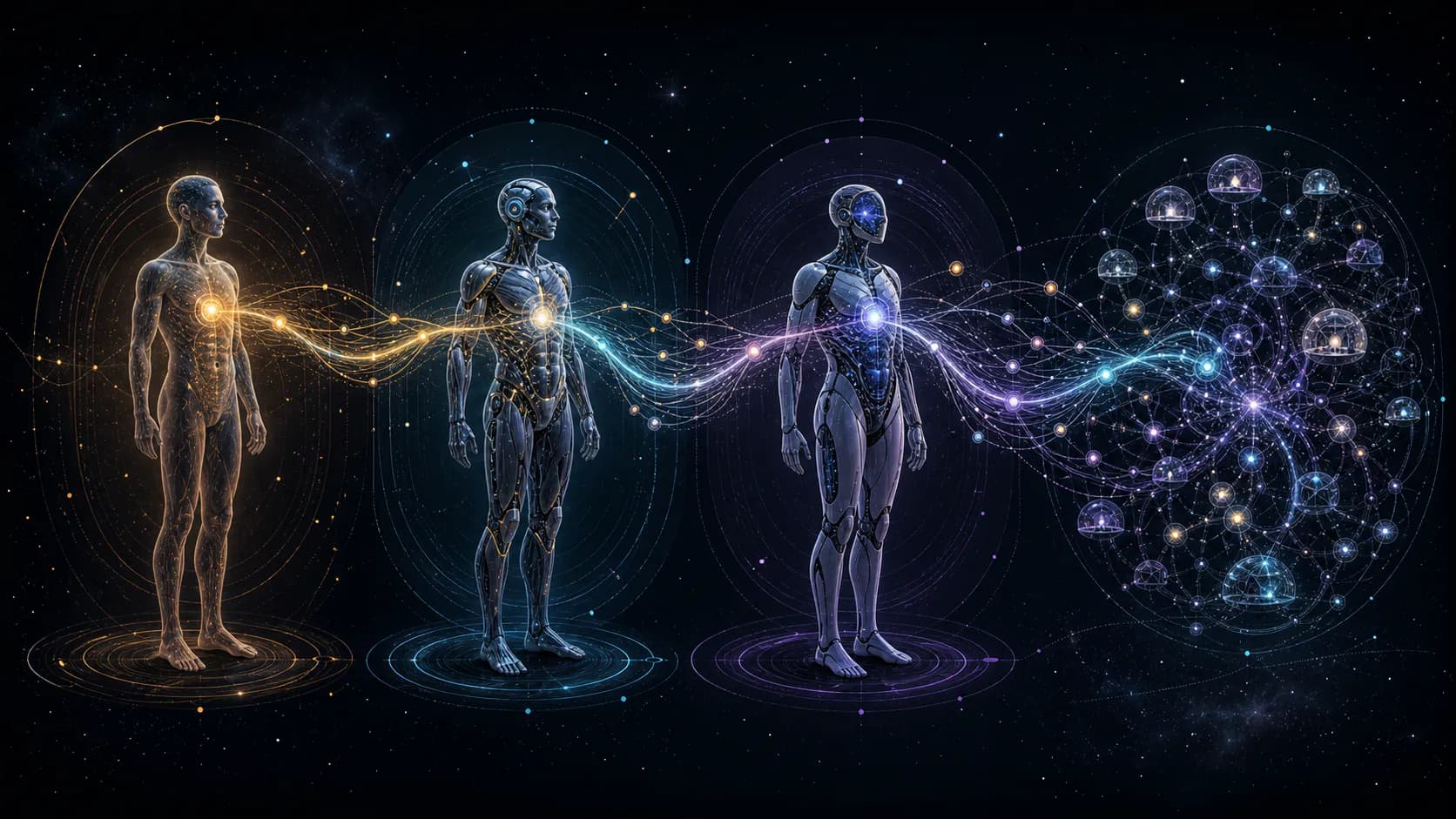
Posthuman identity asks whether a person remains the same when technology radically changes the body, mind, lifespan, or number of possible selves.
Mechanism
How it operates
Stories test different anchors of identity: continuous consciousness, remembered biography, bodily continuity, relationships, legal recognition, or an information pattern. Copying exposes conflicts because two successors can share one past without sharing one future.
Human stakes
Why it matters
Editable people unsettle inheritance, responsibility, mortality, and belonging. A change that feels like liberation to one person may look like replacement, inequality, or disappearance to another.
Used in: 15 catalog novels
Related: Memory technology · AI rights · Consciousness and intelligence
A few terms make the rest of the explanation easier to follow.
- Psychological continuity
- Overlapping chains of memory, intention, character, and self-understanding that connect a later person to an earlier one.
- Bodily continuity
- Persistence through the ongoing life of one organism or embodiment, even while its material components gradually change.
- Branching identity
- A case in which several successors share the same earlier history but acquire different experiences and futures.
Use the idea while reading
Turn the definition into three observations
Do not begin by asking whether a novel is “about” posthuman identity. Begin with what changes in the lives of its characters, then use the concept to explain the mechanism underneath that change.
- 01
Notice what physical or psychological continuity survives the change.
- 02
Notice whether relationships recognize the transformed person.
- 03
Notice how law handles copies, backups, inheritance, and responsibility.
Keep one question open: What does the story treat as the minimum thread of personal continuity?
Avoid the shortcut: Remembering the same past does not automatically produce one continuing person. Copies can be psychologically continuous with an original while becoming distinct individuals.
How it works, step by step
- 1
Choose what carries continuity
A story may privilege one living body, uninterrupted awareness, remembered biography, relationships, a functional pattern, or legal recognition as the thread of self.
- 2
Change the carrier
Replacement organs, neural implants, synthetic bodies, memory editing, or substrate transfer test whether the chosen thread can survive a radical transformation.
- 3
Introduce duplication or interruption
Copies and backups expose hidden assumptions because several beings may inherit the same past, while destructive transfer may leave no observer who can verify continuity.
- 4
Observe social recognition
Identity is also enacted through promises, kinship, property, responsibility, and care. Institutions may accept or reject a successor even when memories remain intact.
A concrete example
Gradual replacement and a restored copy
Your neurons are replaced one at a time by functionally equivalent devices. Years later, an earlier biological scan is also reconstructed.
01
The gradually transformed person has continuous activity, relationships, and new memories, giving strong support to an unbroken life.
02
The reconstructed person remembers the same childhood but lacks the intervening years and begins a separate stream of experience.
03
Both can claim the shared past, yet they cannot share one future body, legal account, or responsibility without conflict.
The point
Continuity can be strong without remaining numerically one. Copying turns identity from a simple transfer question into a problem of related successors with competing legitimate claims.
What is real, and what remains uncertain
First separate what we can observe or build today from what remains a prediction or a fictional extension.
What evidence supports it
Emerging technology and speculation
Prosthetics, implants, gene editing, and life extension are real fields. Whole-mind copying and radical substrate transfer remain speculative.
A common misunderstanding
Remembering the same past does not automatically produce one continuing person. Copies can be psychologically continuous with an original while becoming distinct individuals.
Try this example in your head
Your brain is replaced one small functional part at a time. Years later a biological copy is reconstructed from an earlier scan. Which being is you, and what fact would make that answer change?
Philosophy offers rival criteria
No experiment alone determines whether bodily, psychological, biological, relational, or pattern continuity is the correct account of personal persistence.
Technical feasibility remains uneven
Prosthetics and implants already alter embodiment, but complete memory copying and whole-mind transfer have not been demonstrated.
How science fiction tests the idea
Stories usually test both the promise of an idea and the trouble it creates.
Its promise
Continuity of memory preserves the person.
Its problem
Identity depends on an unbroken embodied life.
What to notice in a story
- 01
What physical or psychological continuity survives the change
- 02
Whether relationships recognize the transformed person
- 03
How law handles copies, backups, inheritance, and responsibility
Novels that use this idea
Societal scale
Cautious · Layered
A Memory Called Empire
Mahit remains herself while Yskandr's memories alter what she notices, desires, and can do, challenging any clean border between inherited capability and personal identity.
Societal scale
Dark · Demanding
Altered Carbon
A stored soldier is transmitted into a stranger's body to investigate a rich man's death in a society where immortality is real only for people who can afford its infrastructure.
Civilization scale
Cautious · Demanding
Ancillary Justice
Breq shares continuity with a former ship-scale self while one body's limited senses and singular future create a life that cannot simply be called the same or different.
Cosmic scale
Dark · Demanding
Blindsight
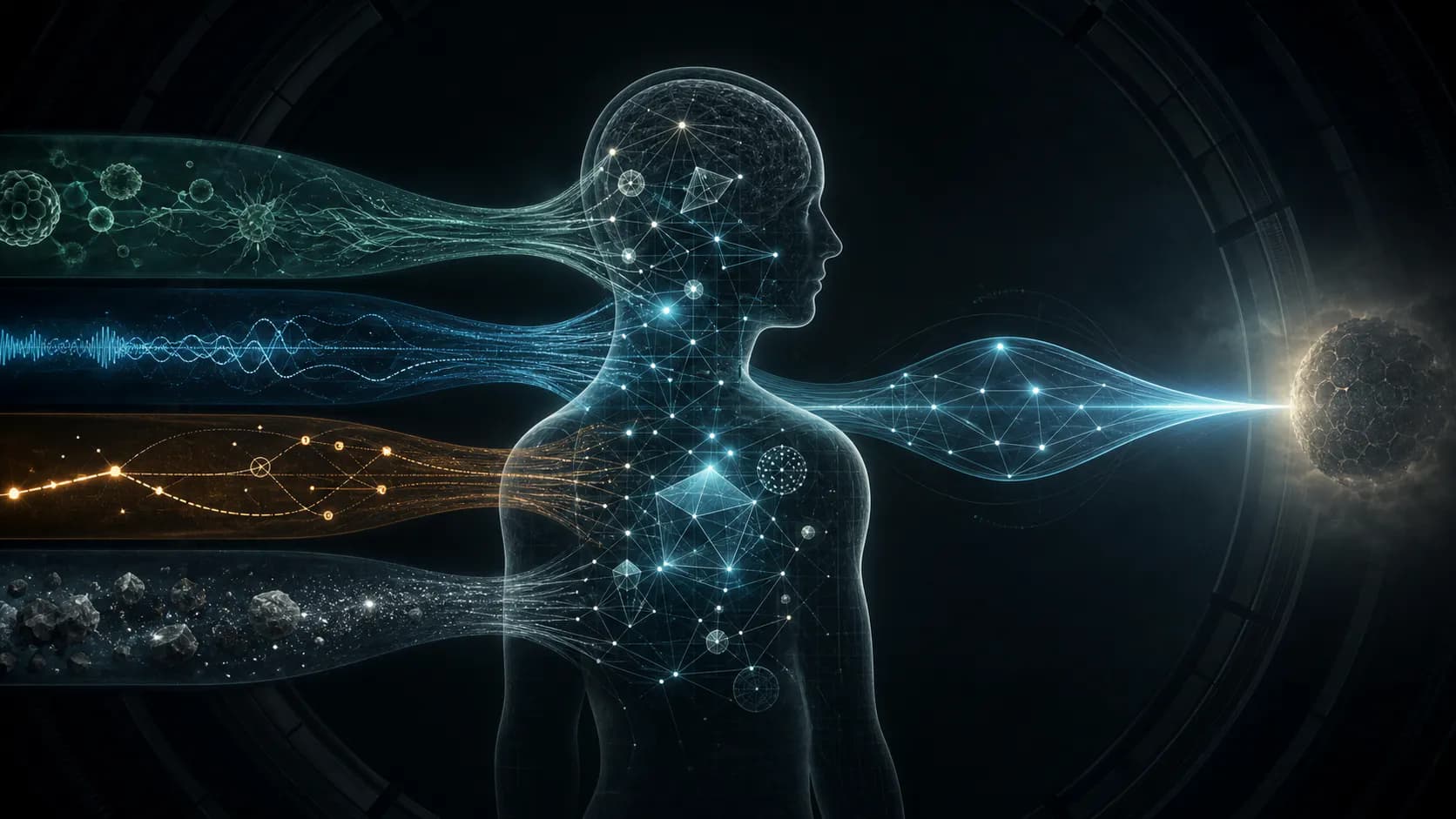
Altered bodies and partitioned minds make specialization productive while leaving every crew member unsure where a coherent human self begins or ends.
Visual example · A synthesist maps people without becoming them
Societal scale
Dark · Demanding
Broken Angels
Takeshi Kovacs deserts a planetary war for a corporate salvage mission whose prize is a functioning gateway to an ancient Martian starship.
Civilization scale
Balanced · Demanding
Children of Memory
A child remembers incompatible histories of a failing colony while hidden visitors discover that the settlement may be a mind rehearsing lives that never happened.
Civilization scale
Cautious · Demanding
Children of Strife
A traumatized researcher and a mantis-shrimp captain descend to a living world where uploaded terraformers have spent millennia fighting through evolution itself.
Civilization scale
Dark · Layered
Dawn
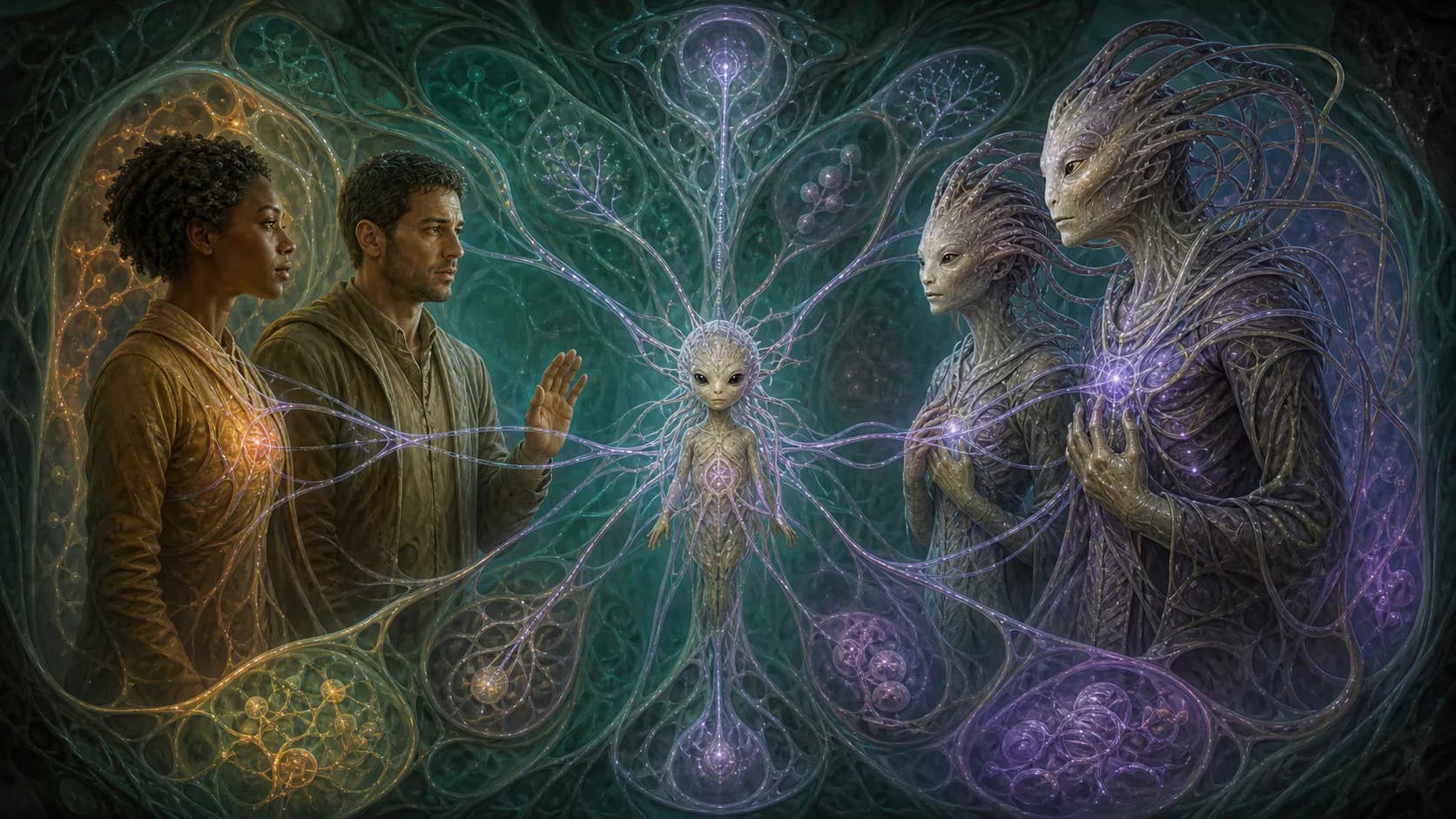
Healing and enhancement make the boundary between preserving a person and redesigning humanity impossible to treat as a purely technical question.
Visual example · Every benefit passes through the same mediator
Cosmic scale
Hopeful · Demanding
Diaspora
A digital person born without a human original joins a civilization-wide flight from astrophysical disaster and follows a trail beyond familiar space, bodies, and universes.
Civilization scale
Dark · Demanding
Echopraxia
An unmodified biologist is forced aboard a mission with hive minds, soldiers who switch off awareness, and a vampire whose plans intersect an alien intelligence.
Civilization scale
Cautious · Layered
Endymion
Centuries after the WorldWeb falls, Raul Endymion rescues a girl from the Time Tombs and flees a resurrection empire through the dead paths of its former portals.
Cosmic scale
Balanced · Demanding
House of Suns
Two travelers from a lineage of nearly a thousand cloned selves arrive late to a reunion and find their family massacred. Their search for the killer unearths a buried galactic crime.
Societal scale
Dark · Demanding
Neuromancer
A burned-out data thief gets his nervous system repaired for one final run, only to discover that the employer directing the heist is an artificial mind seeking merger.
Cosmic scale
Hopeful · Demanding
The Rise of Endymion
Aenea begins teaching a direct, embodied alternative to Pax resurrection while Raul crosses years of time debt to rejoin her before the Core closes its trap.
Societal scale
Dark · Demanding
Woken Furies
Back on Harlan's World, Kovacs protects a deCom leader who may contain a dead revolutionary while a younger copy of himself is sent to hunt them both.
Questions to keep thinking about
What does the story treat as the minimum thread of personal continuity?
Is transformation chosen freely or imposed by survival and inequality?
Does a longer or copied life preserve identity—or create descendants who inherit it?
Sources and further reading
These references ground the portable lesson; story interpretations remain editorial analysis.