
The idea in plain English
Plain idea
What changes
Strategic deterrence tries to prevent an action by convincing an opponent that the resulting cost will be greater than any possible gain.
Mechanism
How it operates
Deterrence needs capability, communication, and credibility. The opponent must believe the threatened response can occur, understand what triggers it, and expect the decision-maker to follow through despite fear, uncertainty, or self-damage.
Human stakes
Why it matters
Deterrence can produce peace without trust, but that peace depends on correct interpretation under pressure. Accidents, hidden weakness, false alarms, or a change of leadership can turn a stable threat into rapid catastrophe.
Used in: 6 catalog novels
Related: Cosmic sociology · Information asymmetry · Survival ethics
A few terms make the rest of the explanation easier to follow.
- Capability
- The technical and organizational ability to impose the threatened consequence after the opponent acts.
- Credibility
- The opponent's belief that the decision-maker is sufficiently willing and able to carry out the threat.
- Second-strike capability
- A force or channel expected to survive an initial attack and still deliver a retaliatory response.
- Escalation
- A sequence in which actions and reactions increase the intensity, scope, or stakes of a conflict.
Use the idea while reading
Turn the definition into three observations
Do not begin by asking whether a novel is “about” strategic deterrence. Begin with what changes in the lives of its characters, then use the concept to explain the mechanism underneath that change.
- 01
Notice what exact action triggers the threatened response.
- 02
Notice how capability and willingness are communicated.
- 03
Notice which technical or human link could fail during a crisis.
Keep one question open: Why does the opponent believe the threat today?
Avoid the shortcut: Possessing a devastating weapon does not automatically deter. The threat must be detectable, survivable, connected to clear conditions, and believable to the particular opponent.
How it works, step by step
- 1
Define the prohibited action
The deterrent must communicate which behavior crosses a boundary; vague triggers create room for testing, accident, or incompatible interpretation.
- 2
Preserve a response capability
The opponent must expect that disabling the defender first will not reliably prevent the threatened consequence.
- 3
Communicate willingness and restraint
Signals must make response believable while showing that avoiding the prohibited act leaves a safer path than immediate escalation.
- 4
Maintain decision integrity under pressure
Sensors, command chains, authentication, leadership, and time for interpretation must resist false alarms, sabotage, panic, and unauthorized action.
A concrete example
Mutual location broadcast
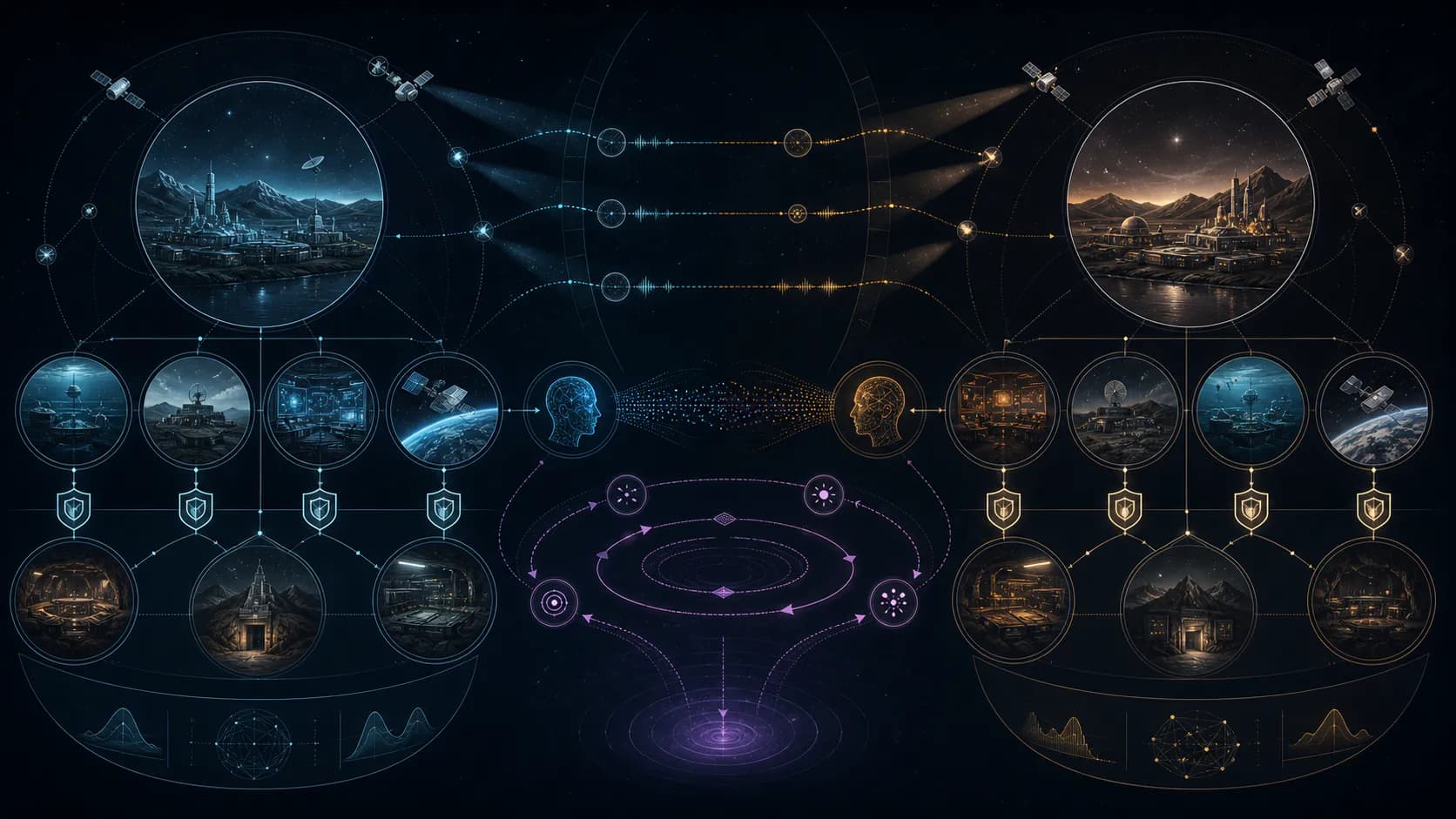
Two worlds can each transmit the other's location to a powerful third party that would destroy both systems.
01
Deterrence works only if each side believes the other can transmit after an attack and knows what action would trigger the broadcast.
02
A hidden technical failure, uncertain leader, or ambiguous sensor alert can make one side doubt capability or misread restraint.
03
The peace is stable only while both prefer continued coexistence to testing whether the opponent will accept mutual destruction.
The point
Deterrence is a belief-dependent system of capability, communication, and command. Destructive power alone cannot create a reliable boundary.
What is real, and what remains uncertain
First separate what we can observe or build today from what remains a prediction or a fictional extension.
What evidence supports it
Established strategic theory
Deterrence is studied through nuclear strategy, policing, international relations, and game theory. Fiction tests it across unfamiliar actors, technologies, and distances.
A common misunderstanding
Possessing a devastating weapon does not automatically deter. The threat must be detectable, survivable, connected to clear conditions, and believable to the particular opponent.
Try this example in your head
Two worlds can each reveal the other's location to a third party that would destroy both. Peace lasts only while each believes the other can and will transmit before being stopped.
Stability is conditional
New technology, leadership, alliances, surveillance, defenses, or beliefs can change whether a threat remains survivable and credible.
Humanitarian cost remains real
A strategy may reduce the probability of attack while depending on consequences so severe that failure would exceed available relief and recovery capacity.
How science fiction tests the idea
Stories usually test both the promise of an idea and the trouble it creates.
Its promise
Mutual vulnerability can create a stable space in which rivals coexist.
Its problem
A peace maintained by annihilation remains coercive, fragile, and morally compromised.
What to notice in a story
- 01
What exact action triggers the threatened response
- 02
How capability and willingness are communicated
- 03
Which technical or human link could fail during a crisis
Novels that use this idea
Cosmic scale
Dark · Demanding
Death’s End
The Swordholder system shows that a deterrent's social legitimacy and its predicted willingness to retaliate can point in opposite directions.
Civilization scale
Dark · Accessible
Ender's Game
A six-year-old boy is sent to an orbital war school because adults believe he can save Earth. Every apparent game teaches him to win while hiding what his victories really cost.
Civilization scale
Dark · Layered
Nemesis Games
With the Rocinante crew scattered across the solar system, four private journeys expose a coordinated attack designed to break the old political order.
Civilization scale
Dark · Layered
Persepolis Rising
Decades after the Free Navy war, an empire returns from isolation with alien-enhanced warships and a plan to place every human world under one command.
Cosmic scale
Dark · Demanding
The Dark Forest
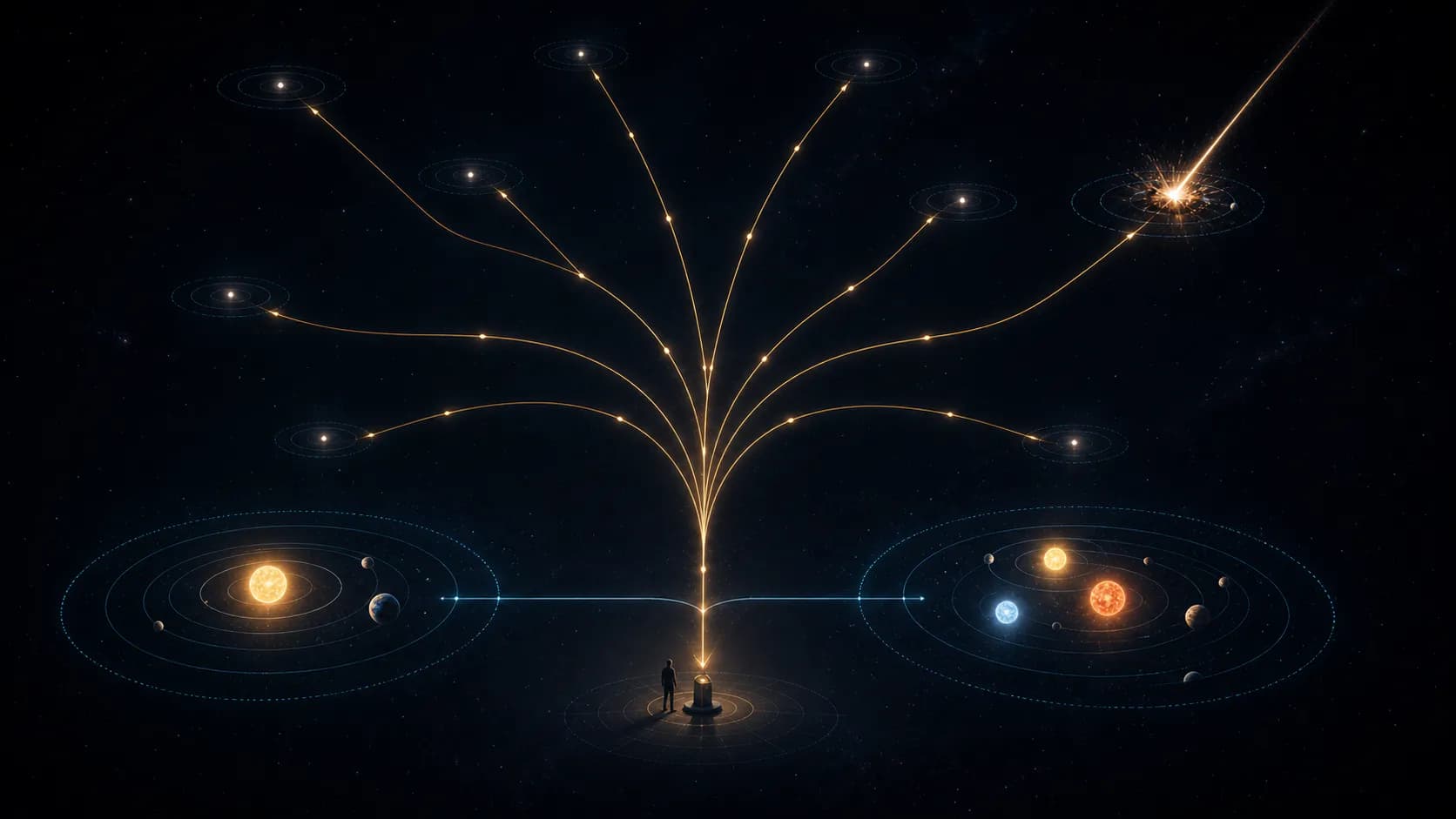
Peace becomes possible when exposing one civilization would credibly bring unacceptable danger to both.
Visual example · How shared exposure creates deterrence
Civilization scale
Dark · Layered
The Killing Star
A near-light-speed attack erases human civilization before anyone can respond. The scattered survivors must learn why an unknown species wants every last witness gone.
Questions to keep thinking about
Why does the opponent believe the threat today?
Is the threatened consequence proportionate, controllable, or morally usable?
Does deterrence reduce violence—or postpone it while increasing the cost of failure?
Sources and further reading
These references ground the portable lesson; story interpretations remain editorial analysis.