The idea in plain English
Plain idea
What changes
Survival ethics asks what people may do when not every life, community, value, or future can be preserved at once.
Mechanism
How it operates
A crisis creates scarcity, urgency, and uncertainty. Different ethical rules prioritize total lives, equal chances, the most vulnerable, existing duties, cultural continuity, consent, or refusal to commit certain harms even for a better outcome.
Human stakes
Why it matters
Selection rules decide more than who lives. They define which relationships and principles a surviving society carries forward—and whether survival remains a shared project or becomes permission for domination.
Used in: 17 catalog novels
Related: Strategic deterrence · Intergenerational governance · Cosmic commons
A few terms make the rest of the explanation easier to follow.
- Triage
- A method of prioritizing limited attention or treatment according to urgency, likely benefit, or another stated rule.
- Scarcity
- A condition in which available resources cannot satisfy every relevant claim at the same time.
- Procedural justice
- Fairness in who participates, which reasons are public, how decisions are reviewed, and whether rules apply consistently.
- Moral remainder
- The unresolved regret, duty, or loss that can remain even after the most defensible tragic choice.
Use the idea while reading
Turn the definition into three observations
Do not begin by asking whether a novel is “about” survival ethics. Begin with what changes in the lives of its characters, then use the concept to explain the mechanism underneath that change.
- 01
Notice who defines the scarce resource and the available options.
- 02
Notice which selection principle is used and who is exempt from it.
- 03
Notice whether earlier inequality created the supposedly unavoidable choice.
Keep one question open: What value is the group trying to survive for?
Avoid the shortcut: A tragic choice is not automatically beyond criticism. Scarcity may be real while the process, prior inequality, available alternatives, and decision-maker's interests still matter.
How it works, step by step
- 1
Verify the scarcity
Decision-makers should establish what resource is limited, for how long, and whether procurement, sharing, delay, substitution, or prevention can change the constraint.
- 2
Choose and disclose a principle
Maximizing lives, equal chance, urgency, vulnerability, reciprocity, existing duty, and social function prioritize different people and require justification.
- 3
Apply the rule consistently
Relevant evidence, conflicts of interest, exemptions, appeals, and treatment of similarly situated people determine whether the process is legitimate.
- 4
Preserve accountability after the crisis
Records, review, compensation, and reform address avoidable scarcity and prevent emergency choices from becoming a permanent hierarchy of whose life counts.
A concrete example
Air for one hundred of one hundred twenty
A damaged habitat has enough air-processing capacity for one hundred residents until rescue arrives.
01
A lottery treats claims equally but may exclude the technicians needed to keep the remaining system operating.
02
Skill-based selection may protect more lives while rewarding existing privilege and giving decision-makers power to define usefulness.
03
Before selecting anyone, the community must test repair, rationing, shelter, evacuation, and whether earlier inequality created the shortage.
The point
Survival ethics is not solved by declaring a hard choice unavoidable. The scarcity, alternatives, selection rule, process, and society preserved by the decision all remain open to judgment.
What is real, and what remains uncertain
First separate what we can observe or build today from what remains a prediction or a fictional extension.
What evidence supports it
Ethical framework
Triage, disaster allocation, war, ecological collapse, and public health already create survival conflicts. Fiction sharpens them through extreme scarcity and closed systems.
A common misunderstanding
A tragic choice is not automatically beyond criticism. Scarcity may be real while the process, prior inequality, available alternatives, and decision-maker's interests still matter.
Try this example in your head
A habitat has air for one hundred people and one hundred twenty residents. A lottery is equal, skill-based selection protects repairs, and prioritizing children preserves more future years. No rule is neutral.
No rule removes tragedy
Equal chance, expected benefit, vulnerability, and duty protect different values, so a defensible choice can still leave serious loss and obligation.
Emergency framing can manufacture scarcity
Leaders may narrow options, ignore unequal preparation, or protect privileged reserves and then present exclusion as a neutral technical necessity.
How science fiction tests the idea
Stories usually test both the promise of an idea and the trouble it creates.
Its promise
Extreme scarcity can make tragic selection unavoidable even when no choice is clean.
Its problem
Treating survival as the highest good can destroy the values that make survival meaningful.
What to notice in a story
- 01
Who defines the scarce resource and the available options
- 02
Which selection principle is used and who is exempt from it
- 03
Whether earlier inequality created the supposedly unavoidable choice
Novels that use this idea
Civilization scale
Dark · Demanding
A Canticle for Leibowitz
An order of monks preserves blueprints and shopping lists through a post-nuclear dark age, only to watch recovered knowledge rebuild the power to destroy civilization again.
Societal scale
Cautious · Layered
A Memory Called Empire
Mahit must choose among secrecy, personal safety, loyalty to Lsel, care for friends, and interventions that may preserve the Empire while leaving its expansionist structure intact.
Cosmic scale
Cautious · Layered
Abaddon's Gate
When an alien Ring opens beyond Uranus, a human flotilla carries its old rivalries into a place whose physical rules no one understands.
Societal scale
Dark · Demanding
Broken Angels
Takeshi Kovacs deserts a planetary war for a corporate salvage mission whose prize is a functioning gateway to an ancient Martian starship.
Civilization scale
Cautious · Demanding
Children of Strife
A traumatized researcher and a mantis-shrimp captain descend to a living world where uploaded terraformers have spent millennia fighting through evolution itself.
Civilization scale
Dark · Layered
Dawn
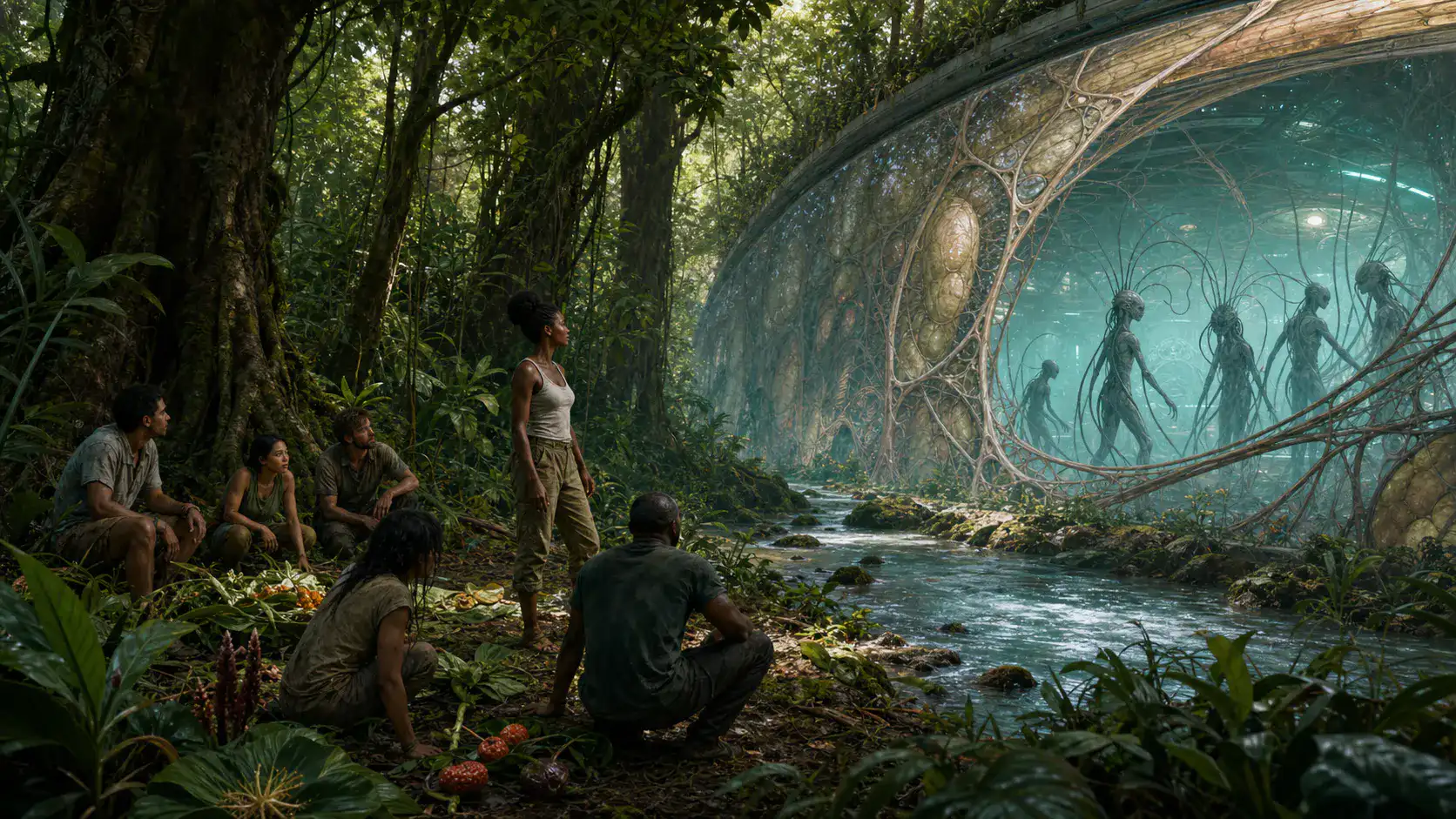
The promise to prevent extinction is repeatedly used to narrow which refusals, risks, and human futures remain available.
Visual example · A wilderness can still be an enclosure
Cosmic scale
Dark · Demanding
Death’s End
Civilization repeatedly asks whether preserving life justifies coercion, exclusion, retaliation, or abandoning its moral identity.
Civilization scale
Dark · Demanding
Dune
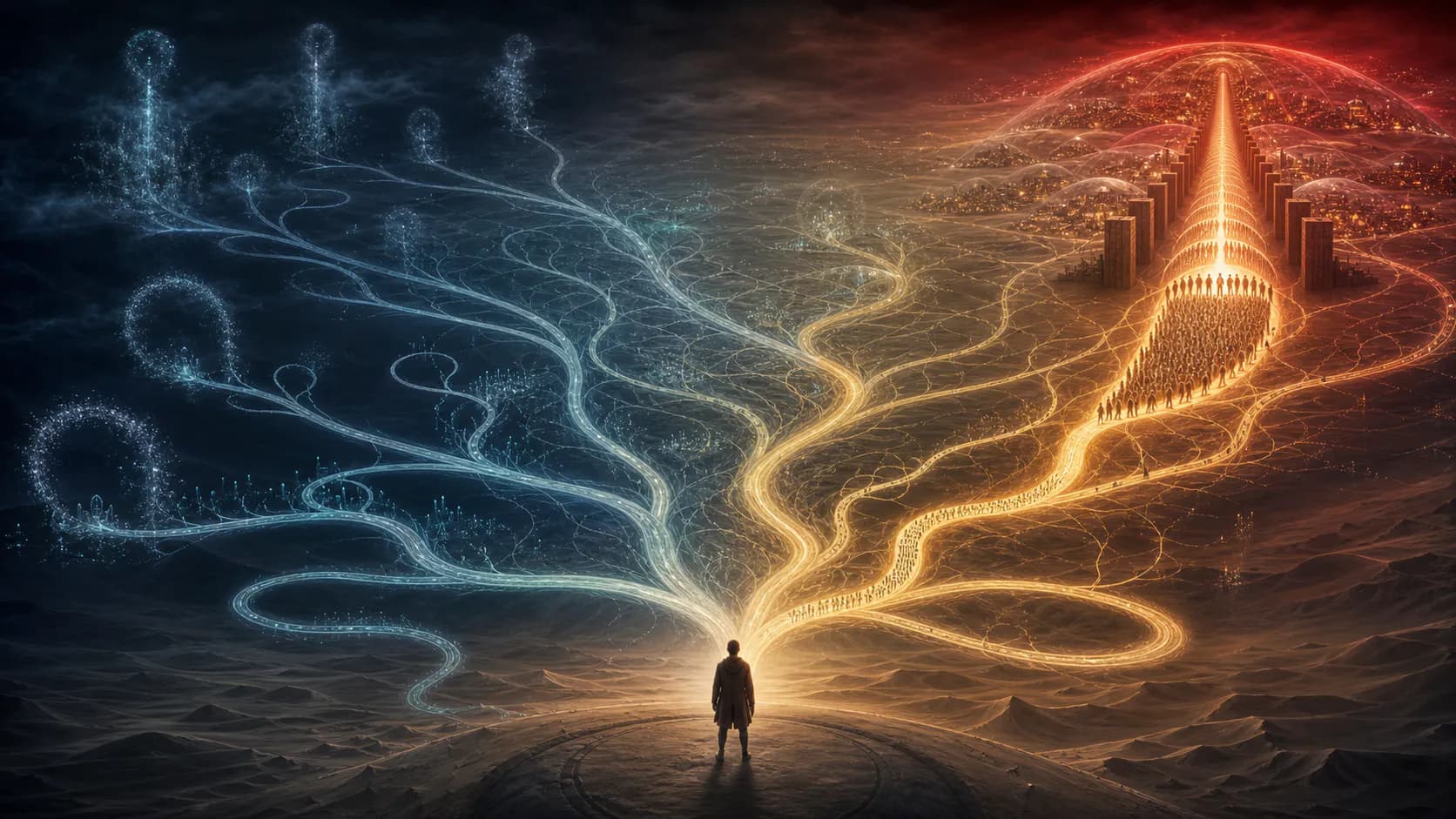
Paul repeatedly chooses immediate survival through tools that preserve his family and allies while increasing the probability of violence beyond Arrakis.
Visual example · Seeing the future can narrow the chooser
Civilization scale
Dark · Accessible
Ender's Game
A six-year-old boy is sent to an orbital war school because adults believe he can save Earth. Every apparent game teaches him to win while hiding what his victories really cost.
Cosmic scale
Balanced · Demanding
Leviathan Falls
As the gate network begins turning human minds against one another, the scattered survivors of Laconia must decide whether unity is salvation or extinction by another name.
Societal scale
Cautious · Layered
Parable of the Sower
Lauren repeatedly weighs immediate safety against the obligations created by witnessing suffering, accepting strangers, sharing resources, and building a group whose rules must remain livable after the emergency.
Civilization scale
Hopeful · Demanding
The Arrows of Time
Saving the home world requires choices made without guaranteed outcomes, including whether to endanger a reversed-time civilization and whether descendants may refuse inherited sacrifice.
Cosmic scale
Dark · Demanding
The Dark Forest
Deep-space scarcity turns cooperation, sacrifice, and preemptive violence into immediate decisions among human survivors.
Societal scale
Balanced · Demanding
The Eternal Flame
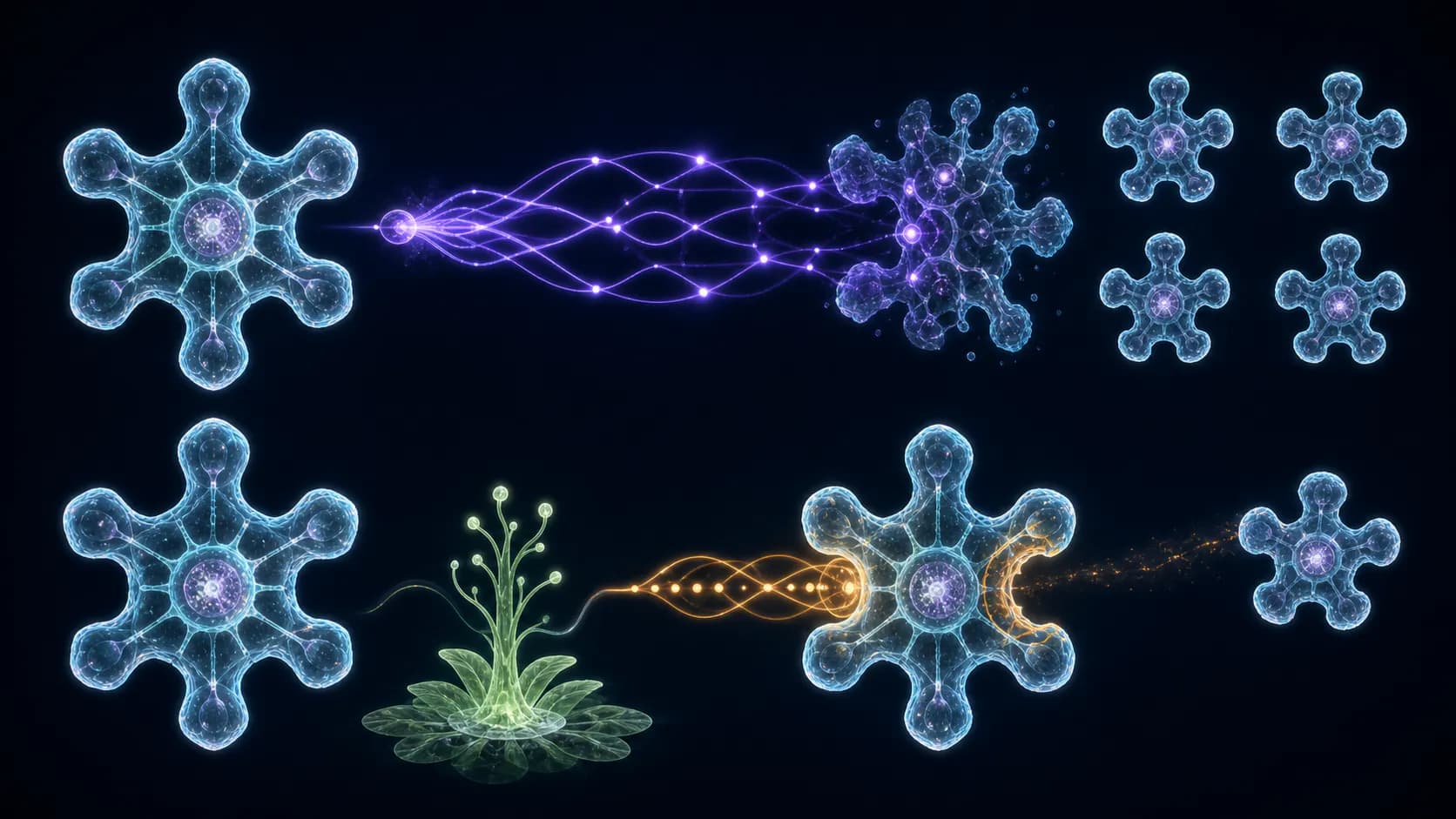
The novel rejects a choice between extinction and cruelty by asking scientific work to expand the set of morally available futures.
Visual example · A changed signal turns fate into a choice
Civilization scale
Dark · Layered
The Killing Star
A near-light-speed attack erases human civilization before anyone can respond. The scattered survivors must learn why an unknown species wants every last witness gone.
Human scale
Hopeful · Accessible
The Martian
NASA and the Hermes crew disagree over who may choose to risk several lives in order to save one, making rescue authority a moral question rather than a calculation alone.
Civilization scale
Dark · Accessible
The War of the Worlds
An unnamed observer crosses a collapsing Victorian England after Martian machines make imperial confidence, military power, and human ownership of Earth suddenly irrelevant.
Questions to keep thinking about
What value is the group trying to survive for?
Who is asked to become a means to someone else's future?
Would the decision still seem necessary if those making it faced the same risk?
Sources and further reading
These references ground the portable lesson; story interpretations remain editorial analysis.
World Health Organization
Health Emergency and Disaster Risk Management: Ethics
MechanismReality checkHuman stakesLimitsWorld Health Organization
Ethics, Resource Allocation and Priority Setting
MechanismReality checkLimitsWorld Health Organization
Interagency Integrated Triage Tool
MechanismReality check