The idea in plain English
Plain idea
What changes
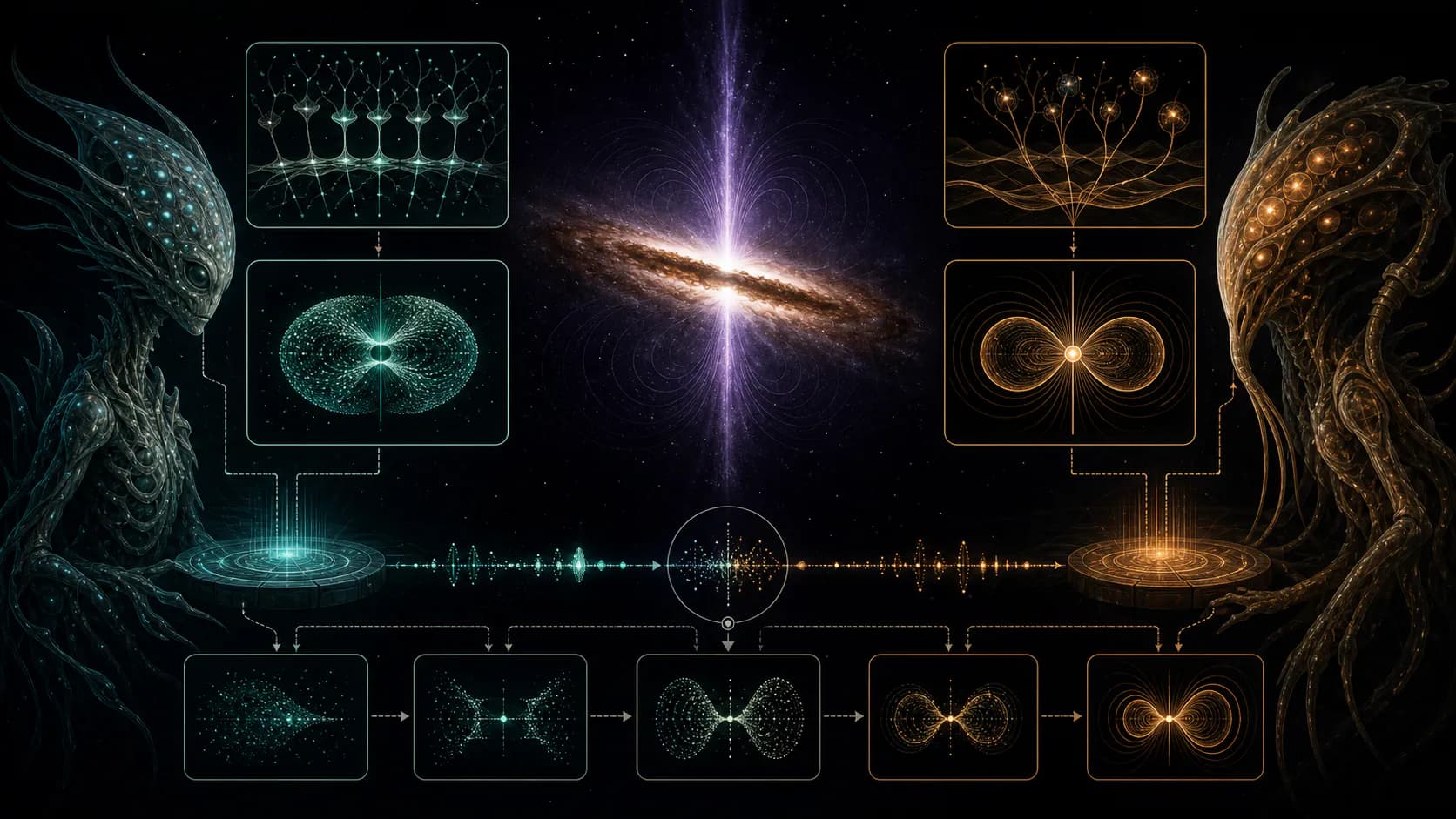
First contact is the first consequential exchange between previously separate intelligent cultures, whether through a signal, artifact, probe, or physical meeting.
Mechanism
How it operates
Contact begins with incomplete evidence. Each side must infer agency, meaning, capability, and intention without shared laws or history. Distance and communication delay can make even a simple reply an irreversible commitment.
Human stakes
Why it matters
The encounter changes how a society understands life, religion, security, and its own unity. It also reveals who is allowed to speak for a world and whose risks are ignored.
Used in: 13 catalog novels
Related: Cosmic sociology · Galactic empire · Climate survival
A few terms make the rest of the explanation easier to follow.
- Detection
- Evidence that may indicate an artificial signal, artifact, or activity and must be independently checked against natural and human causes.
- Technosignature
- An observable sign that could be produced by technology rather than biology or ordinary astrophysical processes.
- Communication delay
- The unavoidable time a signal takes to cross space, preventing immediate clarification, negotiation, or correction.
Use the idea while reading
Turn the definition into three observations
Do not begin by asking whether a novel is “about” first contact. Begin with what changes in the lives of its characters, then use the concept to explain the mechanism underneath that change.
- 01
Notice who controls the first evidence and the decision to answer.
- 02
Notice what each side assumes before translation is reliable.
- 03
Notice whether differences in technology turn dialogue into dependence or coercion.
Keep one question open: Who has authority to represent an entire species?
Avoid the shortcut: First contact is not necessarily a face-to-face meeting. A one-way signal or discovered artifact can transform civilization without either side sharing a room or a conversation.
How it works, step by step
- 1
Notice an anomaly
A telescope, detector, probe, or community encounters evidence that does not fit an ordinary explanation. The first task is measurement, not storytelling.
- 2
Verify the evidence independently
Other instruments and teams test whether interference, error, fraud, or an unfamiliar natural process can reproduce the observation.
- 3
Infer agency and capability cautiously
If an artificial origin remains plausible, observers still do not know the sender's biology, politics, intention, age, or present condition.
- 4
Decide who may announce or answer
Publication and response become governance questions because one institution's message can expose risks or commitments for people who never authorized it.
A concrete example
A narrow-band signal repeats
Several observatories detect a structured radio signal from one nearby star, repeated at intervals that appear deliberate.
01
Teams compare raw data, eliminate satellites and equipment faults, and ask independent observatories to observe the same coordinates.
02
A repeated pattern supports artificial origin but does not reveal whether it is a greeting, beacon, automated relic, warning, or leakage.
03
Any reply would arrive years later and disclose information before the sender's motives or current society could be verified.
The point
First contact begins with disciplined uncertainty. Confirmation, interpretation, announcement, and response are separate decisions with different evidence and authority requirements.
What is real, and what remains uncertain
First separate what we can observe or build today from what remains a prediction or a fictional extension.
What evidence supports it
Speculative scenario
No verified extraterrestrial intelligence is known. Signal detection, language-building, diplomacy, and asymmetric encounters draw on real scientific and historical problems.
A common misunderstanding
First contact is not necessarily a face-to-face meeting. A one-way signal or discovered artifact can transform civilization without either side sharing a room or a conversation.
Try this example in your head
A message from fifty light-years away offers a cure for disease if Earth broadcasts its exact location. No reply can arrive for a century. Who decides whether the offer is genuine or safe?
No confirmed extraterrestrial intelligence
Astrobiology and technosignature searches are active scientific programs, but there is no verified nonhuman civilization against which universal contact rules can be tested.
Historical analogy is incomplete
Human encounters illuminate asymmetry and misunderstanding, yet truly alien bodies, environments, timescales, and intentions may not fit human precedents.
How science fiction tests the idea
Stories usually test both the promise of an idea and the trouble it creates.
Its promise
Contact expands the moral circle.
Its problem
Contact magnifies the power structures already present.
What to notice in a story
- 01
Who controls the first evidence and the decision to answer
- 02
What each side assumes before translation is reliable
- 03
Whether differences in technology turn dialogue into dependence or coercion
Novels that use this idea
Cosmic scale
Dark · Demanding
Blindsight
Contact begins as forensic intrusion: humanity must decide whether fluent responses indicate another subject, an automated defense, or something outside that distinction.
Civilization scale
Hopeful · Layered
Children of Time
Contact begins long before face-to-face recognition: both civilizations observe partial signals, misclassify the other, and plan under existential uncertainty until the choice between extermination and translation becomes unavoidable.
Cosmic scale
Hopeful · Layered
Contact
Contact begins with a one-way detection whose scientific clarity immediately produces political, religious, and personal struggles over who may speak for humanity.
Civilization scale
Dark · Layered
Dawn
Contact begins after one side has already rescued, studied, confined, and altered the material conditions of the other's survival.
Civilization scale
Dark · Demanding
Echopraxia
An unmodified biologist is forced aboard a mission with hive minds, soldiers who switch off awareness, and a vampire whose plans intersect an alien intelligence.
Civilization scale
Dark · Accessible
Ender's Game
A six-year-old boy is sent to an orbital war school because adults believe he can save Earth. Every apparent game teaches him to win while hiding what his victories really cost.
Civilization scale
Cautious · Accessible
Leviathan Wakes
An ice-hauler officer and a Belt detective follow one missing woman into a conspiracy capable of turning political tension into system-wide war.
Civilization scale
Hopeful · Layered
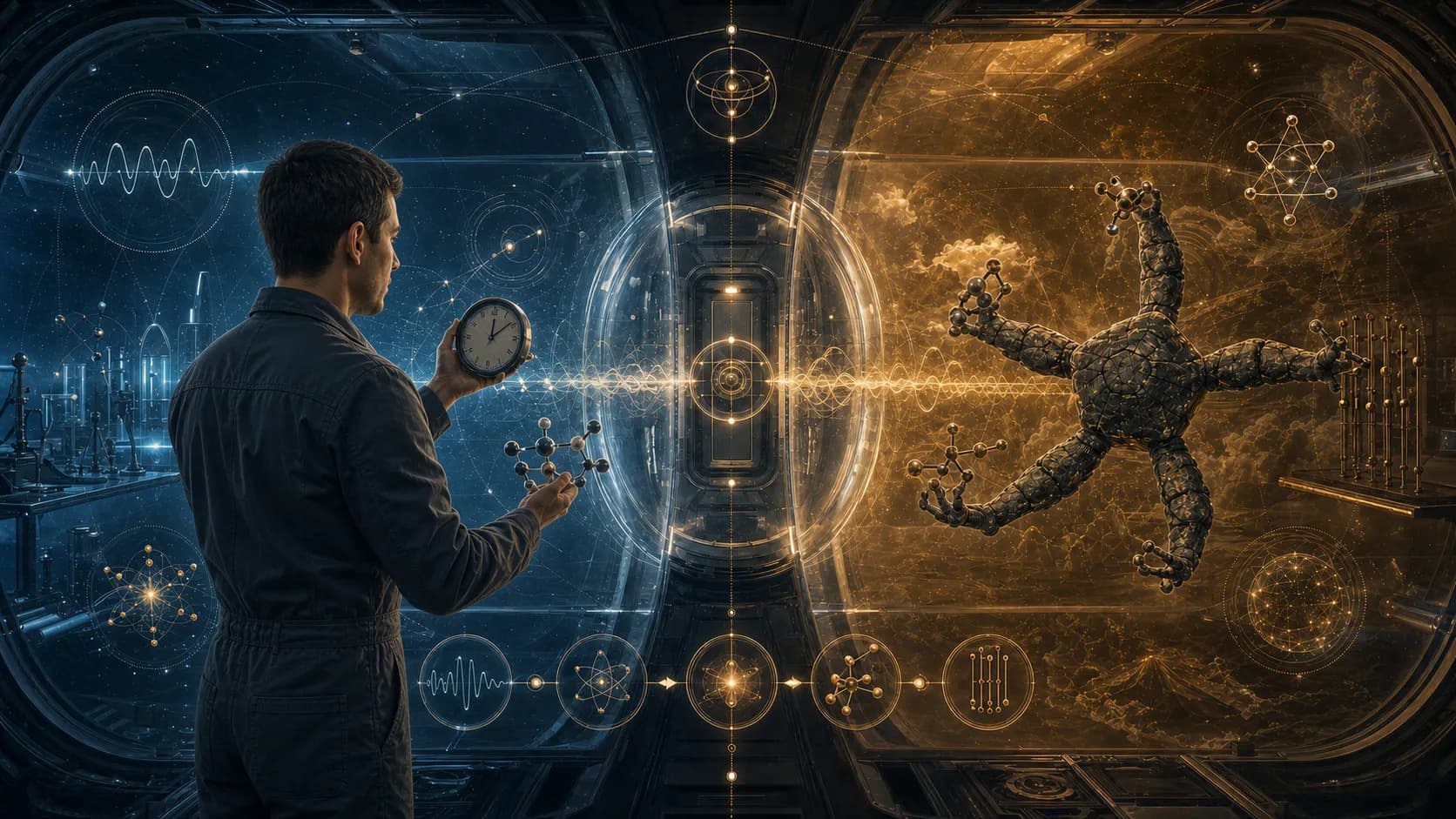
Project Hail Mary
Contact begins as a practical attempt to compare measurements, then becomes a test of whether curiosity can mature into responsibility.
Visual example · Build meaning from what both sides can test
Cosmic scale
Cautious · Layered
Pushing Ice
A mining crew chases Saturn's departing moon Janus for a brief look at an alien machine. The chase becomes a one-way journey that turns a shipboard disagreement into a civilization's history.
Civilization scale
Dark · Layered
The Killing Star
A near-light-speed attack erases human civilization before anyone can respond. The scattered survivors must learn why an unknown species wants every last witness gone.
Civilization scale
Dark · Demanding
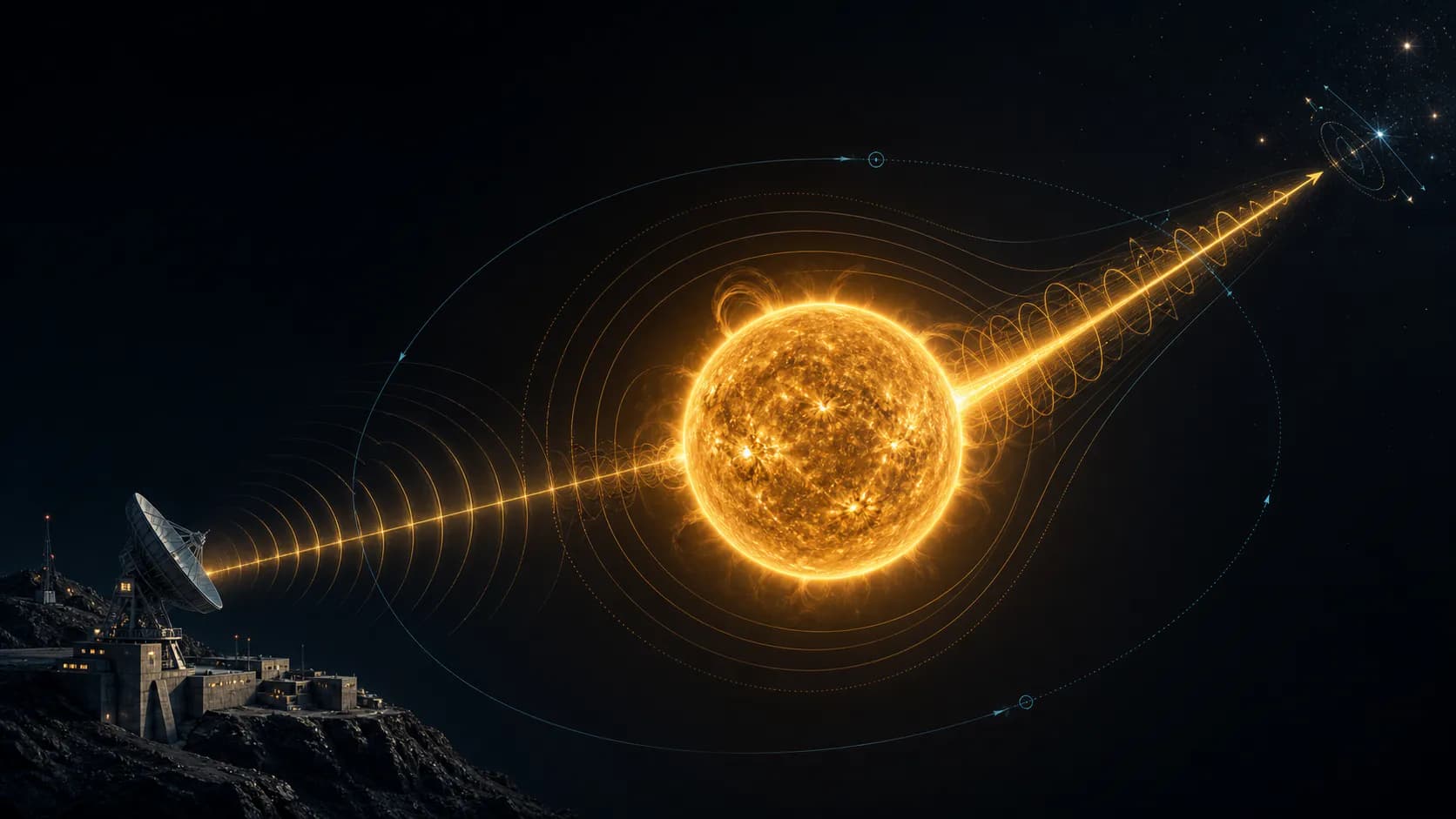
The Three-Body Problem
Contact begins as a historically situated human decision long before two civilizations physically meet.
Visual example · How one decision becomes an interstellar signal
Civilization scale
Dark · Accessible
The War of the Worlds
An unnamed observer crosses a collapsing Victorian England after Martian machines make imperial confidence, military power, and human ownership of Earth suddenly irrelevant.
Cosmic scale
Cautious · Demanding
Tiamat's Wrath
With Holden imprisoned and the Rocinante crew dispersed, a hidden resistance confronts Laconia while experiments awaken the force that destroyed the gate builders.
Questions to keep thinking about
Who has authority to represent an entire species?
Which human conflicts are projected onto the unknown intelligence?
What can trust mean when verification takes decades or centuries?
Sources and further reading
These references ground the portable lesson; story interpretations remain editorial analysis.